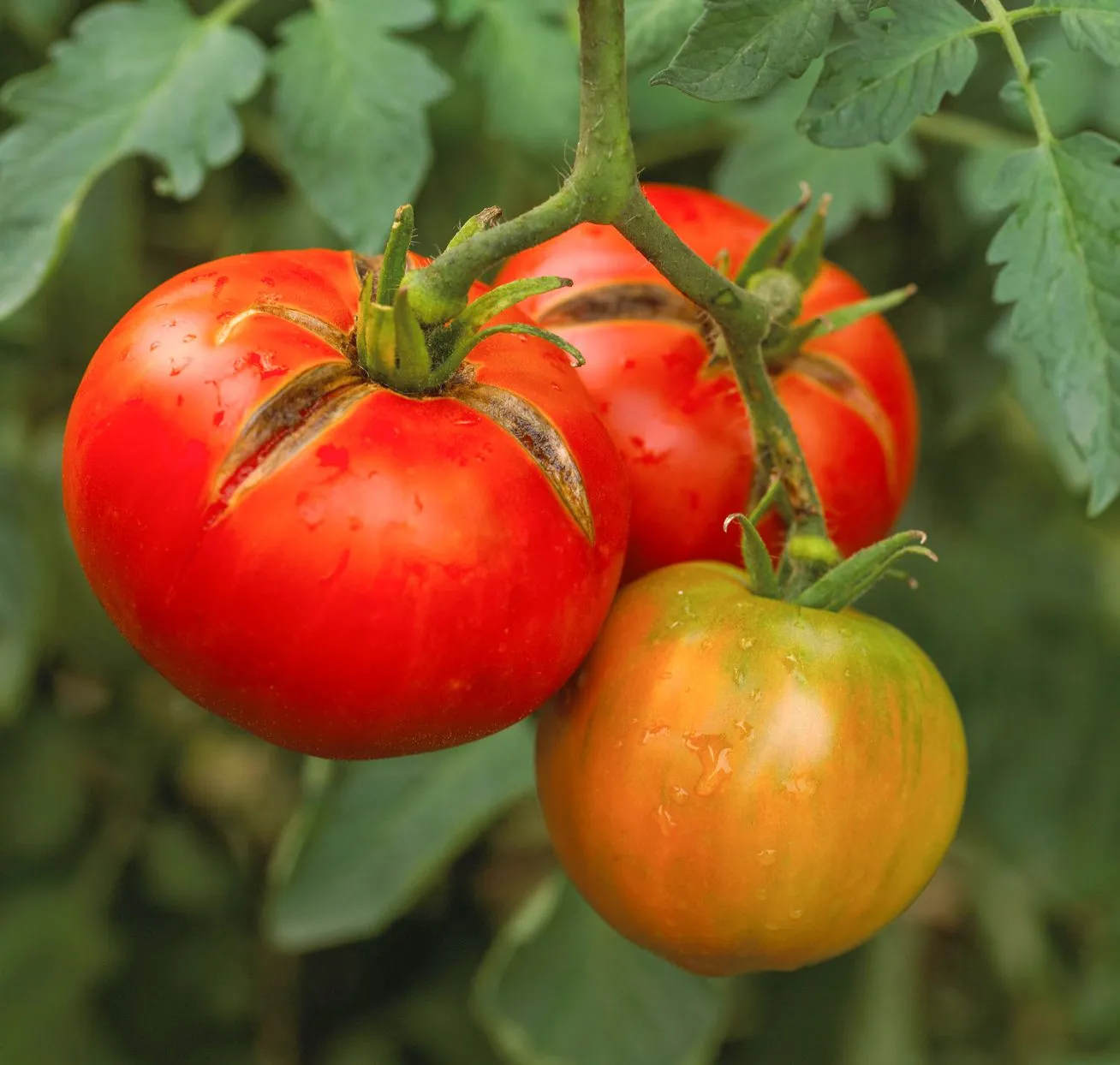
You have high hopes for your tomatoes and can practically taste the delicious recipes you'll make with your homegrown plants. But then, you notice a problem. "Why are my tomatoes splitting?" you ask yourself in frustration. Here's what's going on.
Damaged skin around the stem end of a ripening tomato is often the result of cracking, also called side splits. Trouble sets in fast when tomatoes crack during hot, humid weather. The split skin opens the door for fruit-rotting microbes to invade. At first glance, tomato cracks might look like a new, horrible disease, but it's one of the most common problems you'll run into when growing tomatoes. Prevent cracking with three simple growing tips to ensure you get a bumper crop of delicious, split-free tomatoes.
Why are my tomatoes splitting?
The grocery store is filled with tomatoes sporting smooth, glossy, blemish-free skin. These types of tomatoes are bred to be uniform. Every stage of their production is controlled and regimented to ensure each fruit is as close to perfect as possible. Plus, any that happen to split typically get removed before making their way to the produce aisle.
In contrast, the tomatoes you grow in your garden will usually appear more varied. But sometimes those irregularities become damaging, like splits in your tomatoes. When the outer skin cracks, the delicate tomato flesh gets exposed to the elements, leading to fast fruit decline.
Tomato cracking is typical when there are big swings in the water available to plants. A prolonged dry period followed by a deep, soaking rain will cause tomato plants and fruit to grow more rapidly. The tomato skins crack when the flesh expands faster than the skin. Tomato splitting isn't caused by a pest or disease that will spread to other plants. There is no concern about a plant with cracked tomatoes sharing the problem with nearby plants.
If skins crack when the tomatoes are green, the fruit will likely rot before it ripens. However, if the fruit shows signs of ripening (turning red, pink, yellow, purple), you can harvest it and salvage much of it, notes Gretchen Voyle of Michigan State University Extension. "All that needs to be done is trim out the damaged areas," she says. Then, you can use the rest of the tomato in salsas, sauces, or other favorite fresh or cooked recipes.
Tips for Preventing Tomato Splitting
Once tomatoes split, the damage cannot be undone. However, there are a few things you can do to prevent the cracks from occurring.
Water Tomato Plants Consistently
Tomatoes grow best with about 1 inch of water a week. If rainfall is less than that, water plants as needed. Use a drip hose or watering wand to deliver water directly to the base of plants. Watering plants at the base and keeping leaves dry will help prevent several common foliar diseases.
Mulch Around Plants
Spread a 2-inch-thick layer of mulch around the base of tomato plants to help conserve soil moisture. The mulch slows evaporation and helps prevent big swings in soil moisture and skin cracks. Use organic mulch, such as well-decomposed compost, straw, or grass clippings. At the end of the season, either turn any remaining mulch into the soil or leave it in place to continue breaking down beneath a fresh layer of mulch the following season.
Grow Split-Resistant Tomato Varieties
Some tomato varieties are better at tolerating fluctuating amounts of moisture than others. Tomatoes that resist splitting include 'Celebrity', 'Juliet', 'Plum Regal', and 'Pink Girl'. When shopping for tomatoes, check plant tags for resistance to cracking and certain diseases.
Watch Out for These Tomato Problems
Tomatoes are susceptible to disease, rot, and other problems, but if you keep a close eye on your plants and recognize issues before they get too overwhelming, you can save your crop. Septoria leaf spot causes black spots and yellow leaves and happens when the weather is hot and wet. Blossom drop occurs when the temperatures get too high (over 85°F) or too low (under 58°F), and can be prevented with plant coverings. Plants getting too much sun can result in tomato sunburn or sunscald. For more about tomato diseases, check out this list of possible problems.